I want to be the kind of person who says things like "oh, let me just mist my ferns" while wearing a linen apron and looking effortlessly put together.
I am not that person.
I am the person who has killed a fiddle leaf fig in under three weeks. I once overwatered a succulent so aggressively that the leaves turned translucent and fell off in a single afternoon. I killed a peace lily — the plant that literally droops when it needs water, a plant that communicates its needs like a toddler tugging on your shirt — because I saw it drooping, thought "I should water that," and then didn't. For four days.
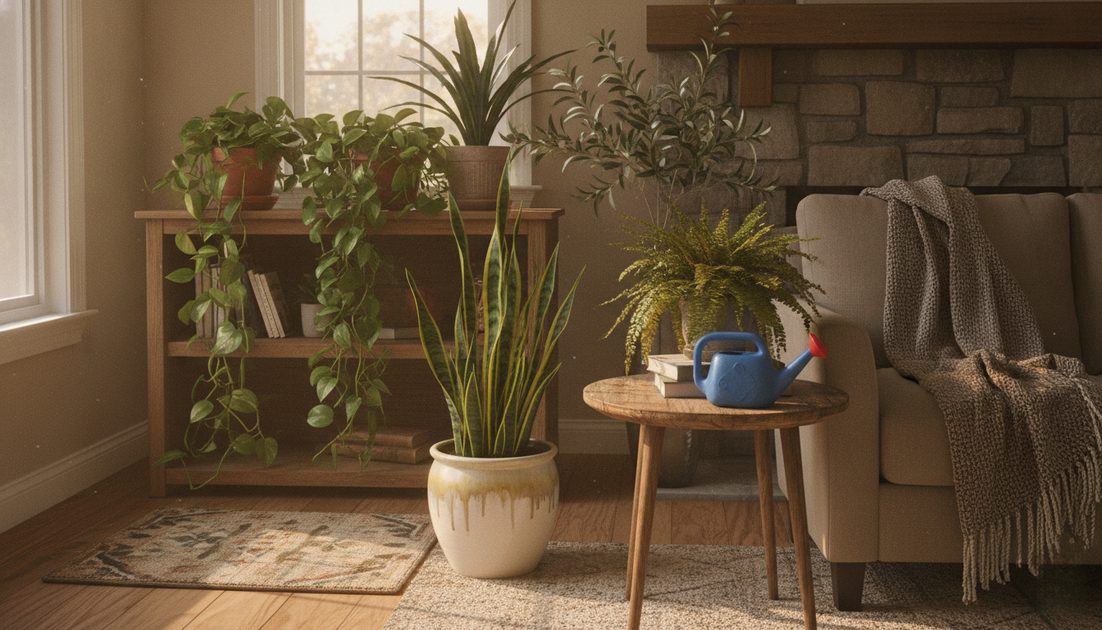
And yet, my home has plants in every room. The living room has a trailing pothos on the bookshelf. The kitchen windowsill has a row of small pots. The bedroom has a snake plant that's somehow survived two moves and a full month without water. My bathroom has a fern. It's fake. Nobody has ever noticed.
This is the honest guide to decorating with plants when you have whatever the opposite of a green thumb is. A brown thumb. A death thumb. Let's call it what it is.
Step One: Accept Who You Actually Are
The most helpful thing I've done for my plant journey is not buying a moisture meter or downloading a watering app. It's admitting that I am a chaotic waterer. I water when I remember. I remember when I see a plant looking sad. Sometimes I overcorrect and drown it. Sometimes I forget for so long that the soil pulls away from the sides of the pot.
I used to buy plants that required consistent care. Calatheas. Ferns. Anything that wanted humidity and a schedule. Those plants are all dead now.
The shift happened when I stopped buying plants for the person I wished I was and started buying plants for the person I actually am: someone who tries hard, means well, and gets distracted by a four-year-old asking for string cheese halfway through a watering session.
Low maintenance indoor plants are not a compromise. They're the entire strategy.
Step Two: Start With the Unkillables
There are plants that thrive on neglect. Not tolerate it — thrive on it. These are the ones you want.
The snake plant is my champion. It lives in a corner of the bedroom that gets almost no light. I water it once a month. Sometimes less. It has never complained. It just stands there, tall and architectural, looking like I know what I'm doing.
The ZZ plant is second place. Glossy leaves, dramatic silhouette, and it genuinely prefers to be left alone. I have one in the darkest corner of my living room. It's been there for two years. I have no idea how it's still alive. I'm not asking questions.
Pothos is the most forgiving trailing plant on earth. When it needs water, the leaves droop visibly. You water it. It perks back up within hours. It's the plant equivalent of a friend who tells you exactly what they need and doesn't hold a grudge when you're late.
These three are the foundation of plant decor for beginners. Start with them. Keep them alive for six months. Let that confidence build before you attempt anything more demanding.
Step Three: Location Is Everything
I used to put plants where they looked good. Now I put them where they'll survive.
That dark corner that would look amazing with a tall tropical plant? That's where the ZZ plant goes — because it's the only thing that won't die there. The sunny windowsill above the kitchen sink? That's for herbs and succulents, because they actually want that much light.
I also started grouping plants by watering needs. The plants that want to dry out completely live on one shelf. The plants that want more frequent water live on another, closer to the sink, where I'll actually see them and remember. This sounds obvious. It took me years to figure out.
The best styling houseplants are the ones that are alive. Placement for aesthetics matters. Placement for survival matters more. A thriving plant in a slightly less ideal spot looks better than a dead plant in the perfect spot.
Step Four: Fake Plants Are Not a Moral Failing
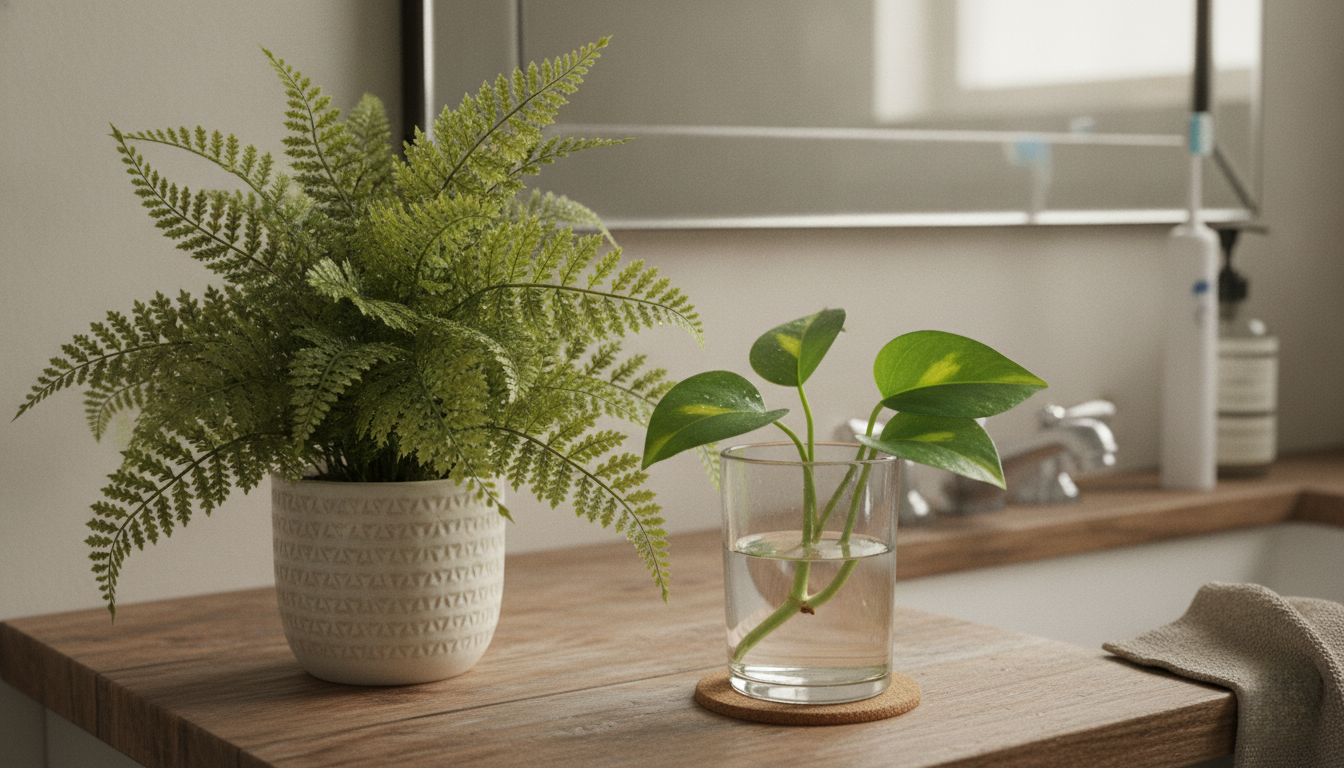
There is a fake fern in my bathroom. It's from a home goods store. It cost $24. It has been "thriving" in a windowless room with zero natural light for three years. Every guest who has used that bathroom has commented on how nice it is to see greenery in there.
Not one person has asked if it's real.
The stigma around faux plants is ridiculous. Yes, a plastic fern from a dollar store looks like a plastic fern. But there are genuinely realistic faux plants available now — echeveria succulents, trailing ivy, even fiddle leaf figs — that look convincing enough to fool most people from three feet away.
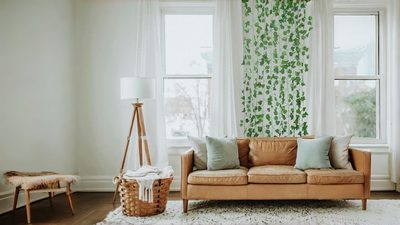
My rule for decorating with plants when real ones keep dying: mix real and fake. I have a real pothos trailing off the bookshelf and a faux olive branch in a vase on the mantel. The real plants make the fake ones look real by association. The fake ones fill the spots where real plants would die. It's a symbiotic relationship. Everyone wins.
Step Five: Accept Death and Move On
I still kill plants. Not as many as I used to, but it happens. Last month I bought a beautiful calathea because it was on sale and I convinced myself this time would be different. It was not different. The leaves crisped up within two weeks. I composted it and moved on.
The difference between past me and present me is that I no longer take plant death as a personal failure. Some plants are finicky. Some seasons are busy. Sometimes a plant just doesn't work in your home's light or humidity, and you won't know until you try.
A dead plant is not a character flaw. It's data. Now you know that plant doesn't work for you. Try a different one.
The One Plant Styling Rule That Actually Matters
Forget the rule of three. Forget varying heights and textures. The only plant styling rule that matters: put plants where you'll see them.
If a plant is tucked in a corner you never walk past, you will forget to water it. It will die. If it's on the kitchen windowsill where you make coffee every morning, you'll see it. You'll notice the drooping leaves. You'll water it before it's too late.
Every plant I've kept alive long-term is in a high-traffic spot. Every plant that died was somewhere I didn't go often enough. Visibility is the simplest watering system there is.
I have a small spider plant on the bathroom counter where I brush my teeth. I have a pothos hanging near the kitchen sink where I do dishes. I have a snake plant next to the chair where I read at night. I see them every day. I water them when they need it. They stay alive.
That's it. That's the whole system. No apps. No schedules. Just put the plant where your life already happens, and let your daily routine do the reminding.
A home is never finished. Neither is my plant collection — but the ones that are still here are here to stay.
No feedback yet — submit the first.