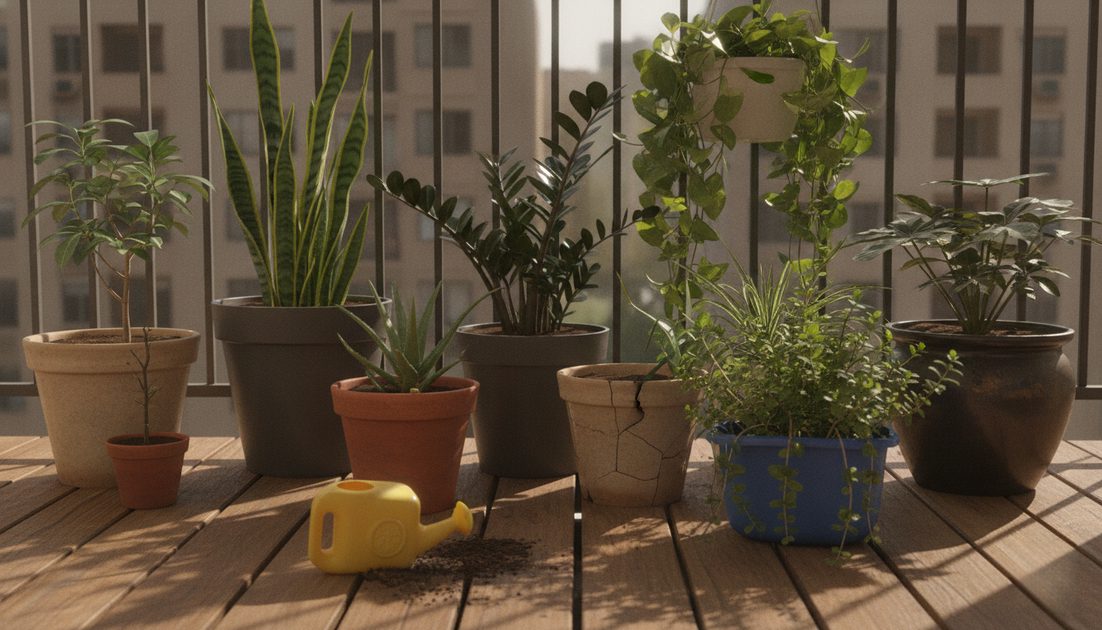
I want to be a plant person. I really do.
I want to be the kind of woman who casually says things like "let me just check on my monstera" while wearing linen pants and holding a ceramic watering can. I want a fiddle leaf fig that thrives, not one that drops leaves every time I look at it wrong. I want a balcony that looks like a secret garden instead of a plant hospice.
Here's the truth: I have killed a fern. Not one fern. Three ferns. In succession. I have killed succulents — the plant everyone swears is unkillable — by both overwatering and underwatering them, sometimes in the same month. I once killed a peace lily so thoroughly that Derek asked if it had been dead when I bought it.
But I also have seven plants on my Nashville balcony and scattered through my living room that are still alive. Some have been alive for over two years now, which in my plant-killing timeline qualifies as a miracle.
These are those plants. They are not exotic. They are not impressive to real gardeners. But they survive my forgetfulness, my guilt-watering, my south-facing balcony that gets too much afternoon heat, and my indoor corners that get almost no light at all.
If I can keep these alive, you can too. This is a beginner container garden list from someone who is still, honestly, a beginner.
1. Snake Plant — The One That Doesn't Care
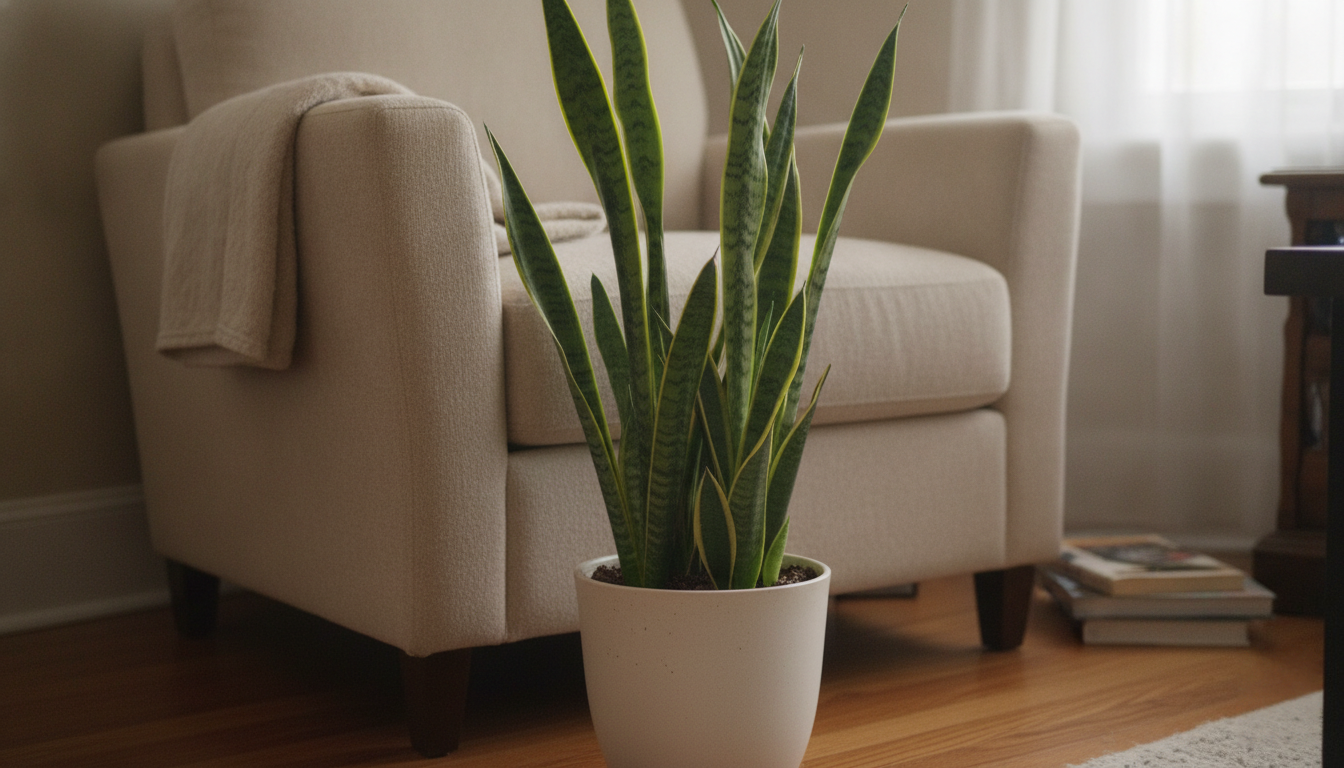
Let me start with the champion. My snake plant has survived two moves, a full month without water when I forgot it was behind the armchair, and a period where Mia used its pot as a drum. It didn't flinch.
Snake plants thrive on neglect. They don't need much light. They don't need much water. In fact, the only way to kill a snake plant is to water it too much, which I learned the hard way with snake plant number one. Water it once every two or three weeks, let the soil dry out completely between waterings, and it will outlive you.
If you're building a collection of low maintenance plants, start here. This is the plant equivalent of a friend who's fine if you don't call for a month.
2. Pothos — The One That Tells You What It Needs
Pothos is the most communicative plant I own. When it needs water, the leaves droop visibly — not dramatically, but enough that you can tell. When it's happy, it grows trailing vines that make you feel like you know what you're doing even if you absolutely don't.
I have one pothos in my kitchen that has survived in a corner that gets almost no direct sunlight. I forget to water it regularly. It doesn't care. It just keeps growing, slowly, patiently, like it's waiting for me to get my act together.
Pothos is also easy to propagate — snip a stem, put it in water, wait for roots, plant it. I've done this twice now and both offspring are alive. That's a 100% success rate on something plant-related, which for me is unprecedented.
3. ZZ Plant — The One for Dark Corners
The ZZ plant looks fake. I mean this as a compliment. It has glossy, almost plastic-looking leaves that make people ask "is that real?" and you get to say "yes" with a mysterious smile as if you're not the person who killed three ferns.
My ZZ plant lives in the darkest corner of my bedroom, about twelve feet from the nearest window. I water it once a month. Sometimes I forget and water it once every six weeks. It does not care. It has never dropped a leaf. It has never turned yellow. It just sits there looking expensive and indestructible.
For anyone attempting an easy houseplant collection in a home with terrible light, the ZZ plant is your answer. It thrives in conditions that would kill almost anything else.
4. Spider Plant — The One That Keeps Giving
I bought one spider plant two years ago. I now have four. Not because I'm a skilled propagator — because spider plants make babies constantly and all you have to do is not throw them away.
The babies, called spiderettes, dangle off the mother plant on long stems. You snip them off, stick them in soil, and they root themselves. I have given spider plant babies to three friends. Two of them have kept theirs alive. The third one killed hers, which honestly made me feel better about my own track record.
Spider plants like indirect light and consistent watering, but they'll survive inconsistent watering. Their leaf tips sometimes turn brown, which I used to panic about before I learned that this is just what spider plants do. It's not you. It's them.
5. Aloe Vera — The One You'll Actually Use
Aloe vera is technically a succulent, which should terrify me given my succulent body count. But aloe is different. It's more forgiving. It stores water in its leaves, so it can go long stretches without watering. It likes bright light but won't die immediately in medium light.
I keep one in my kitchen windowsill. I've used it on minor burns from cooking. I've used it on Mia's scraped knee when she tripped on the front porch steps. There's something deeply satisfying about growing a plant that has an actual purpose beyond looking pretty.
The key with aloe is drainage. Use a pot with a drainage hole and cactus soil mix. Water deeply but infrequently. If the leaves turn mushy, you're overwatering. If the leaf tips turn brown and crispy, you're underwatering. Aloe is one of those plants that survive neglect, but it will give you clues if you're paying attention.
6. Mint — The One That's Almost a Weed
Mint is not a houseplant. Mint is a force of nature that happens to fit in a pot. I grow it in a container on my balcony, and I keep it in its own pot because I've been warned — by multiple actual gardeners — that mint will take over everything if you let it.
Mint needs water and sun and very little else. I forget to water my balcony plants constantly, and the mint has never cared. It grows back thicker every time. I use it in iced tea in the summer. Mia picks leaves and crushes them in her hands because she likes the smell.
For anyone experimenting with container gardening for beginners, start with mint. Or basil. Or chives. Herbs are forgiving in a way that decorative plants rarely are, and you get to eat them, which feels like winning.
7. Cast Iron Plant — The One That Lives Up to Its Name
The cast iron plant is not flashy. It has long, dark green leaves that look like they belong in a Victorian parlor. It grows slowly. It doesn't flower. Nobody comes over and says "wow, what is that?"
But it will not die.
I left mine on the balcony during a heat wave and forgot to water it for two weeks. It survived. I brought it inside during a cold snap and shoved it in a corner with almost no light. It survived. The cast iron plant is the botanical equivalent of a Honda Civic — unglamorous, reliable, and probably going to outlast everything else you own.
This is the plant I recommend to anyone who says "I can't keep anything alive." Yes, you can. You just haven't met the right plant.
The One Thing I've Actually Learned
I used to think I was bad at plants. Now I think I was bad at choosing plants that matched my actual life. I water when I remember. I have a south-facing balcony that gets brutal afternoon sun and indoor corners that get almost none. I have a four-year-old who sometimes "helps" by pouring an entire watering can into one pot.
The plants on this list don't need perfect conditions. They need someone who tries most of the time and doesn't give up when a leaf turns yellow. That's me. That's probably you too.
My balcony is not a secret garden. It's a half-painted collection of survivors — a snake plant that's been ignored, a mint that won't quit, a spider plant that keeps making babies I didn't ask for. It's imperfect and a little chaotic and very much alive.
A home is never finished. Neither is this garden.
No feedback yet — submit the first.