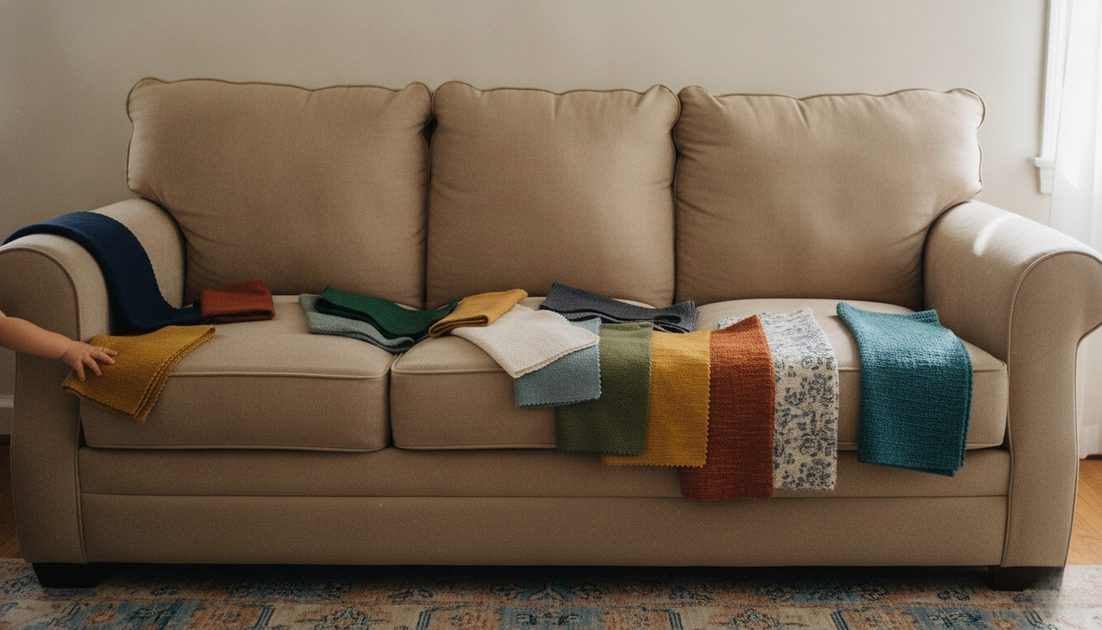
Here is a list of sofa colors I seriously considered over the course of three weeks:
Navy. Forest green. Terracotta. Warm beige. Cool beige. Greige (again, despite the living room incident). Charcoal. Camel leather. Dusty blue. Cream. And one very late night, a shade called "Burnt Sienna" that I still think about but will never admit to out loud.
I am a former interior designer with a color theory certification. I have specified upholstery for over forty client homes. And when it came time to choose a sofa color for my own living room, I nearly lost my mind.
The problem wasn't lack of options. The problem was that I knew too much. I could make a case for every color. Navy is timeless. Green is unexpected but grounded. Beige goes with everything. Camel leather ages beautifully. Cream is fresh and bright. See? I could argue every side. I was in a design argument with myself, and I was winning and losing simultaneously.
Here's how I finally picked a living room sofa color — and the framework that got me unstuck.
The Sofa That Started It All
First, the sofa itself. After months of saving and researching, we invested in a mid-range upholstered sofa from a reputable brand. The style was settled: clean lines, rolled arms, three seat cushions, designed for actual lounging not just looking pretty. Derek's one request was "somewhere I can take a nap." Reasonable.
The sofa came in over forty fabric options. Forty. That's not a choice. That's a psychological experiment designed to break a person.
I ordered fourteen swatches. They arrived in a stack. I laid them out on the floor. Mia walked over, picked up the terracotta swatch, and said "this one is pretty." Then she picked up the navy one and said "this one is also pretty." Then she lost interest and asked for a snack.
I did not lose interest. I obsessively rearranged the swatches for three weeks.
The Framework: Three Questions That Cut Through the Noise
After a week of paralysis, I sat down and wrote out three questions. Not "what color do I like?" — that question was the trap. I like all of them. That's the problem.
Here are the three questions I used to finally decide on a family-friendly sofa color that would actually work in our real, messy, lived-in home.
Question 1: What can't I change?
The walls in our living room are warm off-white. The rug is a vintage-inspired wool blend with faded red, navy, and cream tones. The curtains are linen in a natural flax color. These things are staying. The sofa color had to work with them, not compete with them.
This immediately eliminated the terracotta — too close to the red in the rug, and the room would start to feel like a spice market. It also eliminated the forest green, which fought with the rug's navy tones in a way that made my eyes twitch.
Question 2: What's actually going to happen on this sofa?
This is the question I never had to ask for client projects. A client's sofa gets photographed. My sofa gets lived on. Hard.
Mia eats snacks on this sofa. Derek drinks coffee on this sofa. I spill red wine on this sofa approximately once a month. The dog is not allowed on the sofa, which means the dog is absolutely on the sofa the moment we leave the house.
Cream was out. Camel leather was tempting — it ages beautifully — but Mia once drew on our dining chair with a purple marker and I'm not ready for that kind of emotional journey on a piece of furniture this large. Charcoal felt heavy. Dusty blue felt like a baby nursery.
Question 3: What will I still like in five years?
I have a rule about large furniture purchases: if I wouldn't have picked it five years ago, I probably won't like it in five years. Trends come and go. A sofa is not a throw pillow. It has to outlast the trend cycle.
This eliminated the burnt sienna and the dusty blue. It left me with two contenders: navy and a warm, medium-toned beige that was distinctly not greige.
The Navy Argument
Navy is the designer's default for choosing a sofa color. It hides stains. It anchors a room. It works with almost everything. I've specified navy sofas for clients probably twenty times.
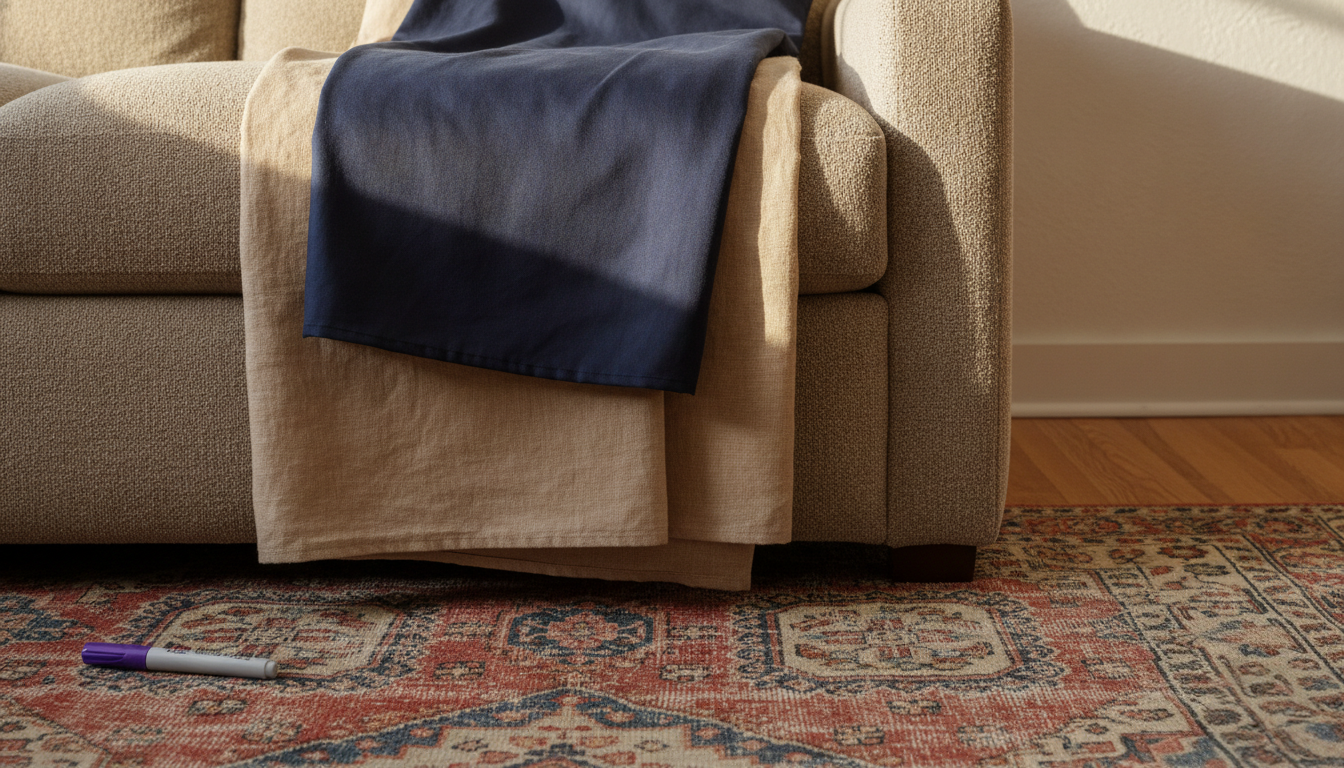
But here's the thing I knew from living with our navy-painted living room for approximately six weeks before we repainted it: dark colors absorb light. Our living room is not huge. A navy sofa would be a large dark mass in the center of the room, and I worried it would visually shrink the space the same way the navy walls had.
Navy made sense on paper. It always does. But I'd learned the hard way that what makes sense on paper doesn't always feel right when you're sitting in the room at 3 p.m. on a Tuesday.
The Beige Argument
Beige has a reputation problem. People hear "beige sofa" and think of a rental apartment in 1998. But a good beige — a warm, slightly sandy beige with enough depth to feel intentional — does something that navy can't: it makes a small room feel bigger.
I tested the beige swatch against the rug. It worked. I tested it against the curtains. It worked. I held it up next to the warm off-white walls. It worked without blending in, which is the hardest trick for a neutral to pull off.
The beige also passed the snack test. It wouldn't show crumbs the way navy would. It wouldn't show pet hair the way charcoal would. It was forgiving — and in a house with a four-year-old and a trumpet player who eats toast on the armrest, forgiveness matters.
What Finally Made the Decision
I didn't decide because I loved beige more than navy. I decided because beige was the color that made the room work the way I actually live in it.
A sofa color for a small living room isn't just about preference. It's about light, space, and what else is happening in the room. Navy was beautiful, but it would have dominated. Beige receded just enough to let everything else breathe — the rug, the art, the thrifted chair in the corner that I love more than any sofa.
I ordered the sofa in the warm beige. It arrived six weeks later. Derek sat down, stretched out, and said, "This is great. What color is it?"
That's when I knew I'd made the right choice. He didn't notice the color. He noticed the comfort. The color was doing its job — quietly, invisibly, making the room feel right without demanding attention.
The Unexpected Bonus
Two months in, Mia spilled grape juice on the cushion. I blotted it with a damp cloth. It came out completely. I'm not saying this is the reason I chose beige, but I'm not not saying it.
A home is never finished. But this sofa decision is.
No feedback yet — submit the first.