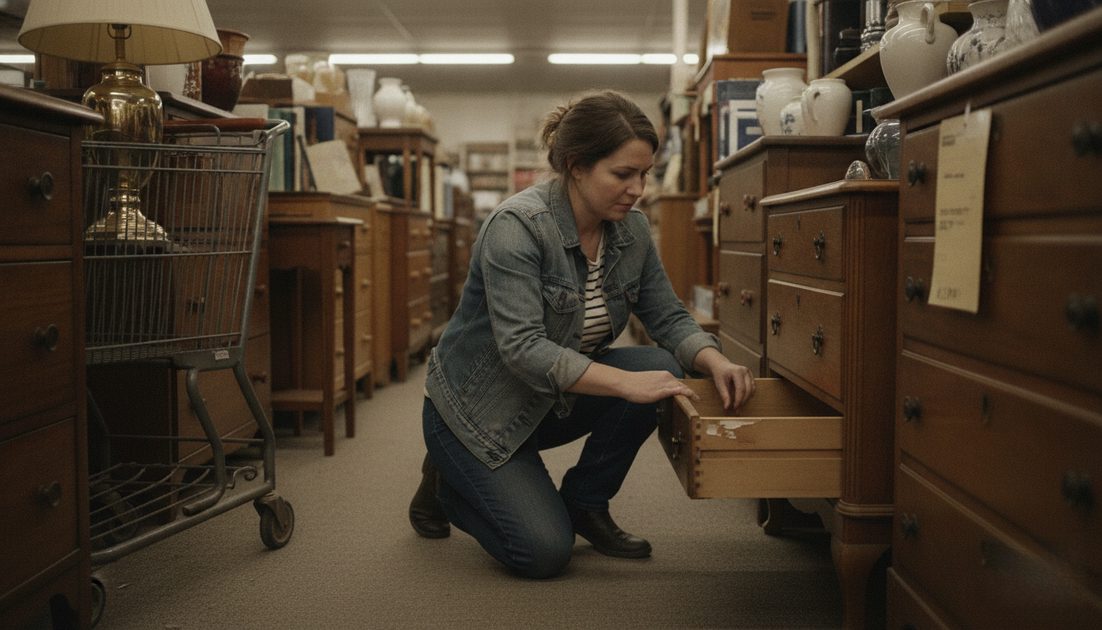
I can tell you the layout of every Goodwill within thirty miles of my house. Not because I'm proud of this. Because it's true.
The one on Charlotte Pike restocks furniture on Tuesdays. The one in Berry Hill has the best picture frame selection. The one out near Bellevue is where I found a solid brass lamp for $12 that now lives in our bedroom and looks like it cost $200. I have a mental map of this city organized entirely by thrift store inventory patterns. Derek finds this both impressive and concerning.
I've been hitting thrift stores regularly since my early twenties, back when I was a design assistant with no budget and a lot of opinions. Over the years, I've dragged home incredible pieces and I've dragged home absolute garbage. I've learned what's worth the gamble and what's never, ever worth the shelf space.
Here are five things I always check before buying at a thrift store furniture aisle — and three things I've learned to leave behind.
Always Check: Solid Wood Construction
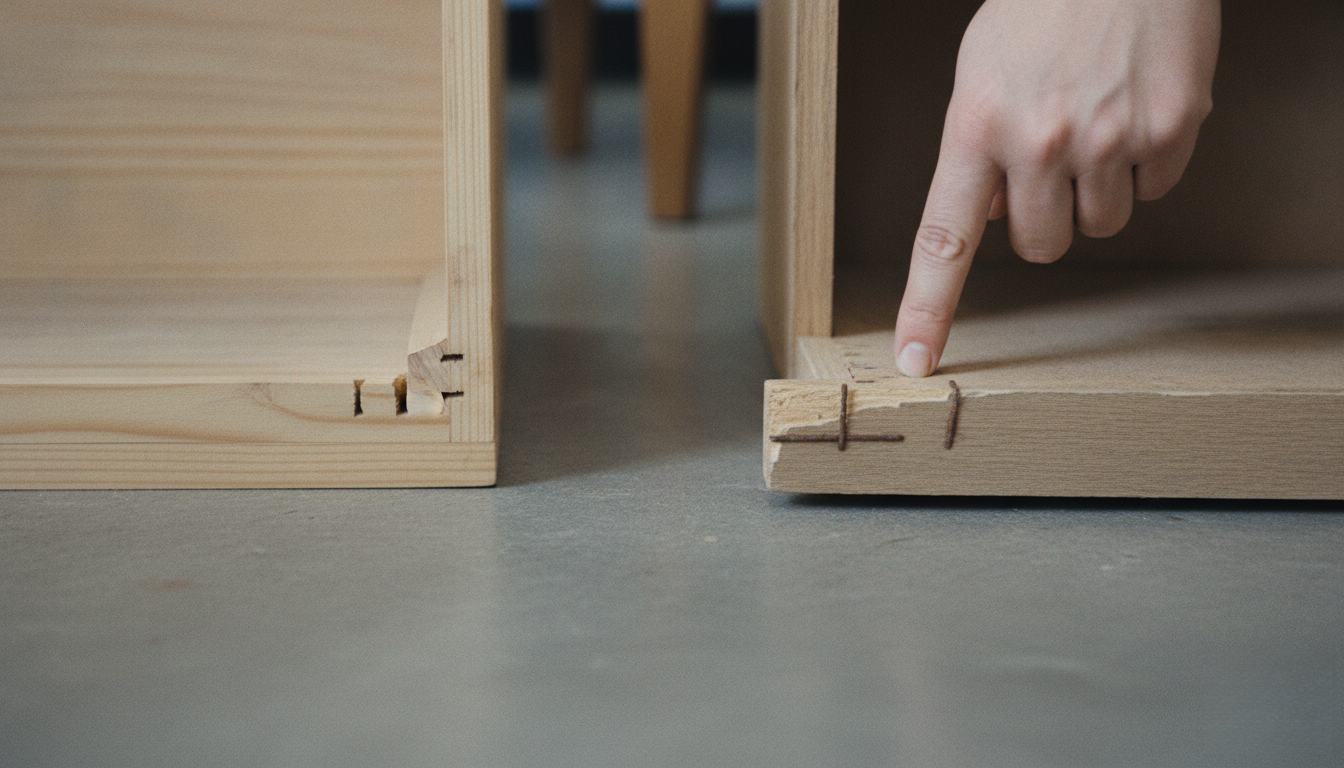
This is my non-negotiable first check. I flip the piece over, pull out a drawer, look at the back, and check the joints. If I see dovetail joints and solid wood, I'm interested. If I see particleboard, staples, or a thin wood veneer peeling at the corners, I walk away — unless the piece is purely decorative and weighs less than my four-year-old.
Solid wood can be sanded, stained, painted, and repaired. Particleboard can't. It's the difference between a piece that lasts another twenty years and a piece that disintegrates the first time you move it across the room.
One trick I use: I knock on it. Solid wood gives a solid thunk. Particleboard sounds hollow and sad. This is not a scientific method. But it works.
Always Check: The Hardware Situation
Missing knobs don't scare me. In fact, missing hardware is often why a perfectly good dresser ends up at Goodwill in the first place, and it's the easiest thing in the world to fix. New hardware costs almost nothing and transforms a piece instantly.
What does scare me: hardware that's been painted over. If someone slathered latex paint directly over the original brass pulls without removing them first, I know the rest of the piece probably got the same careless treatment. That's a red flag, not a dealbreaker — but it tells me what kind of DIY I'm inheriting.
Also, I check whether the existing holes are standard sizes. If they're not, drilling new holes in a finished piece is more trouble than I want. I learned this the hard way with a dresser that had oddly spaced pulls from the 1970s. I ended up filling five holes and drilling five new ones, and I still have feelings about it.
Always Check: The Smell
I mean this literally. I pick up every piece of secondhand home decor and smell it. In public. With no shame.
If a dresser smells like basement, that's fixable — vinegar, sunlight, and time will usually handle it. If it smells like cigarette smoke, that's a much harder problem. Smoke gets into wood fibers and keeps coming back. I've tried sealing it with shellac primer, and it works maybe seventy percent of the time. For me, that's not good enough odds to gamble on.
If it smells like cat urine, I put it down and walk away. There is no fixing that. I don't care if the piece is free.
Always Check: The Wobble
I shake every piece of furniture before I buy it. Gently, but firmly. A slight wobble that can be tightened is fine. A wobble that comes from a cracked joint or a warped leg is not.
Turn the piece over and look at how it's constructed. If the legs are screwed in with brackets, you can tighten them. If they're glued and the glue has failed, you can re-glue and clamp them. If the wood itself is cracked through, that's a structural problem that goes beyond a weekend fix.
I once bought a nightstand with a "minor wobble" that turned out to be a completely split back leg. I tried wood glue. I tried brackets. I tried denial. Nothing worked. It's now in our garage holding paint cans, which is technically a useful purpose but not the one I intended.
Always Check: The Potential, Not the Finish
The single best piece of Goodwill shopping tips I can give you: shop for the silhouette, not the stain.
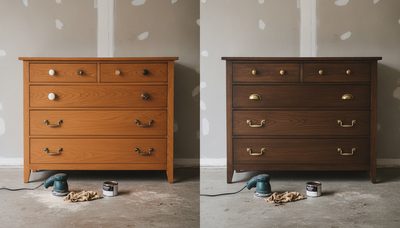
Orange 1970s stain hides gorgeous maple. Bad paint jobs hide beautiful wood grain. A piece that looks dated and sad on the shelf might just need an afternoon with an orbital sander. I try to see past what the piece looks like right now and imagine what it could look like with the right finish.
The $40 Facebook Marketplace dresser I refinished last year is a perfect example. The listing photo was blurry, the stain was orange, and half the knobs were mismatched. My mother would have scrolled past it. Now it's the most complimented piece in our bedroom.
Never Buy Used: Upholstered Furniture With No History
Here's where I draw a hard line. I don't buy upholstered furniture from thrift stores unless I know exactly where it came from. Bed bugs are not a design challenge. Neither are mystery stains, embedded pet dander, or decades of someone else's life ground into the fabric.
A wooden chair with a removable seat cushion I can recover? Fine. A fully upholstered armchair from an unknown home? I leave it. I don't care if it's a mid-century gem. I don't care if it's $15. The risk isn't worth the savings.
The one exception: if I know the piece came from a clean, smoke-free, pet-free home — because I bought it from that person directly on FB Marketplace — then I'll consider it. Goodwill doesn't give you that backstory.
Never Buy Used: Mattresses and Bedding
This one should be obvious. I'm including it because apparently it's not obvious to everyone. I've seen mattresses at thrift stores. I've seen people loading them into cars. I have no words.
Also on this list: bed pillows, mattress toppers, and anything fabric that can't be washed in hot water with bleach. Some deals aren't deals.
Never Buy Used: Anything You Don't Actually Have a Plan For
This is the hardest rule for me to follow. I am physically incapable of walking past something beautiful and cheap without convincing myself I'll find a use for it. I have a closet full of "someday" projects that proves this.
Here's what I've learned: if you don't know exactly where it's going and what you're going to do with it, leave it. A thrift store furniture find is only a good deal if it actually gets used. Otherwise it's just clutter you paid for.
I now have a rule: I don't buy anything unless I can picture the exact spot in my house where it will live. If I can't, I take a photo of it, close the browser tab or walk out of the store, and wait 48 hours. If I'm still thinking about it two days later, maybe it's meant to be. Usually, I've forgotten about it by dinner.
The Real Secret to Thrifting
The best thrifters I know aren't the ones with the biggest budgets or the best luck. They're the ones who go often, check carefully, and don't talk themselves into pieces that aren't right.
You don't need to know everything. You just need to know what you're looking at — solid wood vs. particleboard, structural issues vs. cosmetic ones, potential vs. problems. The rest is patience and the willingness to walk away when the piece isn't right.
A home is never finished. But the pieces in it should earn their place.
No feedback yet — submit the first.